

NON-RESIDENT INCOME TAX
Modelo 210 and non-resident tax.
If you own property in Spain and live abroad, the tax office expects a return even if you do not rent it out. We calculate what applies whether you use, rent or sell your home, and file Modelo 210 on time.
Articles 24 and 25 of the Non-Resident Income Tax Law and Article 85 of the PIT Law.
THREE SITUATIONS
One property,
three different taxes.
The treatment depends on what you do with the property each year.
Personal use or empty
You declare deemed income of 1.1% or 2% of the cadastral value, pro rata for the days owned, taxed at 19% or 24%.
Rented out
Rental income is taxed. EU/EEA residents may deduct directly related expenses; otherwise tax is due on the gross income.
Sale
The gain is taxed at 19%. The buyer withholds 3% of the price on account, and you file Modelo 210 to settle.

HOW WE WORK
Your Spanish property,
in order every year.
We review ownership, use and tax residence so you declare exactly what applies, with complete documents.
- Deemed income calculated on the correct cadastral value.
- Rental income and deductible expenses, where you are entitled to them.
- Tax residence certificate from your country when needed.
- Prior years that were never filed.
- Sale: gain calculation and recovery of the 3% withheld where applicable.
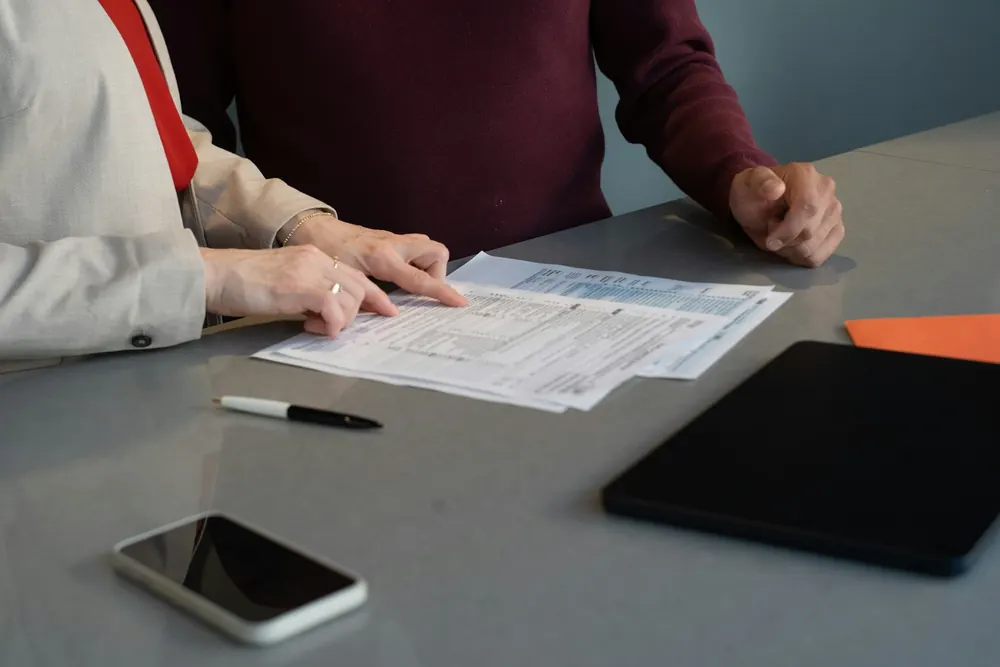
WHAT WE NEED
A few documents
and it is done.
An initial review tells us which years and which income must be declared.
- NIE and country of tax residence.
- Title deed and cadastral reference.
- Property tax (IBI) receipt showing the cadastral value.
- Rental contracts, income and expenses, if you rent.
Who counts as a non-resident for tax
You are a non-resident if you spend no more than 183 days a year in Spain and your main centre of activities or economic interests is not here. Owning a home in Spain does not make you resident, but it does require you to file Modelo 210 for it.
If your country has a tax treaty with Spain, it may limit what is taxed here or let you credit Spanish tax at home. That is why we sometimes request a tax residence certificate from your country.
Deemed income, step by step
If the property is not rented, the tax office assumes income of 2% of the cadastral value, or 1.1% if that value was revised in the previous ten years. It is calculated pro rata for the days you owned it and, with several owners, according to each share.
The cadastral value is shown on your IBI property tax receipt. The 19% or 24% rate then applies, depending on where you live, with no deductible expenses.
Rentals: which expenses you can deduct
If you live in the EU or in an EEA state with effective tax information exchange, you can deduct expenses directly related to the rental, such as those allowed by the income tax law for that income. Outside that area, the law taxes gross income.
Since 2024 income, rentals are declared grouped by year. For 2026 income onwards, the deadline is 1–20 April of the following year.
Late filings
The tax office’s right to assess generally expires after four years. If you have not filed previous years, it is best to regularise them voluntarily before receiving a request.
We check which years are still open, calculate each one and file the outstanding returns.
Several owners and refunds on a sale
If the property has several owners, each declares their share according to their ownership percentage. On a sale, if the 3% the buyer withheld exceeds the tax on the gain, the difference can be recovered by claiming a refund.
Keeping the purchase deed, invoices for improvements and the costs of the sale is what allows the gain to be calculated correctly and, often, lower tax.
Legal review: 24 September 2026
AT A GLANCE
Modelo 210 deadlines
| Income type | What you declare | Filing deadline |
|---|---|---|
| Rental | Rental income (annual grouping since 2024) | 2026 income onwards: 1–20 April of the following year |
| Personal use | Deemed income for the year | 2026 income onwards: 1 April to 31 December of the following year |
| Sale | Capital gain | Three months, starting one month after the sale |
WORKED EXAMPLES
Real numbers,
no small print.
Property for personal use
- Cadastral value (revised within 10 years)
- 200.000 €
- Deemed income (1.1%)
- 2.200 €
- EU resident (19%)
- 418 €/año
- Non-EU resident (24%)
- 528 €/año
Rented property
- Rental income
- 12.000 €
- Deductible expenses (EU/EEA only)
- 3.000 €
- EU resident: €9,000 × 19%
- 1.710 €
- Non-EU: €12,000 × 24%
- 2.880 €
Selling the property
- Sale price
- 300.000 €
- Buyer’s withholding (3%)
- 9.000 €
- €80,000 gain × 19%
- 15.200 €
- Payable with Modelo 210
- 6.200 €
Simplified examples for a full year. Your actual result depends on dates, expenses, depreciation, acquisition cost and any applicable treaty.
STEP BY STEP
How we work
with you.
Review
Ownership, residence and use of the property each year.
Calculation
Deemed income, net rental income or gain, as applicable.
Filing
Modelo 210 on time, with direct debit payment if you prefer.
Records
Receipts kept for any tax office request.
COMMON MISTAKES
What costs the most
later on.
False: a non-resident’s property for personal use creates deemed income every year.
Expense deductions apply to residents of the EU and of EEA states with tax information exchange.
The buyer must withhold and pay 3% of the price; if not, the property remains liable for the tax.
Deadlines change for 2026 income: check the calendar for each type of income.
HOLA LEGAL · BY MOBA LAW
More than one question?
Hola Legal gives you an AI report on your tax and legal situation in Spain in minutes, for €49.
FAQ
Clear
answers.
Who has to file Modelo 210?
Non-residents who earn income in Spain without a permanent establishment, such as property owners: for personal use, rental or sale.
Do I pay if I do not rent out my home?
Usually yes: you declare deemed income of 1.1% or 2% of the cadastral value, pro rata for the days owned, taxed at 19% or 24%.
Which rate applies?
19% if you live in the EU or an EEA state with effective tax information exchange, and 24% otherwise. Gains on a sale are taxed at 19%.
Can I deduct rental expenses?
Yes, if you live in the EU or an EEA state with information exchange and the expenses are directly related to the rental.
What if I have not filed previous years?
It is best to regularise. We check which years are still open and file the outstanding returns.
How far back can the tax office go?
Generally four years: that is the limitation period for assessing tax.
Can I pay by direct debit?
Yes, online filings can be paid by direct debit within the deadlines the tax office sets for each type of income.
YOUR NEXT STEP